Design and engineering rarely ship the same thing. Mockups travel through translation. Decisions get reinterpreted. Animations disappear, spacing drifts, and the details that made the design work quietly fall out of the build. The gap is everything lost in between.
NOGAP is the principle I built to close the cavity between design and engineering, working directly with them inside the codebase. The design system gets built in its own repo: tokens, primitives, components. A prototyping tool built on top organizes new features and stands up functional prototypes seeded with realistic data.
Stakeholders test the prototypes against the actual UX. Engineering pulls the underlying components and the prototype's exported code, feeds it to AI tooling inside their own instance, and rebuilds the UI against production data.
Scroll to read more
THREE STEPS
UNDERSTAND. BUILD. DELIVER. The same loop, running continuously, with design and engineering in the same codebase.
FORGE DSAT UNION.
Forge DS is the public source of truth for design at UNION.
Before it existed, translating from static mockups was not cutting it. It was way too slow, decisions got lost on the way, and the brand drifted across products.
As a Forward Deployed Designer, I built Forge DS in its own repo with tokens, components, and a prototyping tool layered on top, where designers stage new features against seeded data using the same components engineering imports.
Engineering exports the prototype's code straight from Forge and ships exactly what was prototyped, keeping the design language consistent across every UNION product.
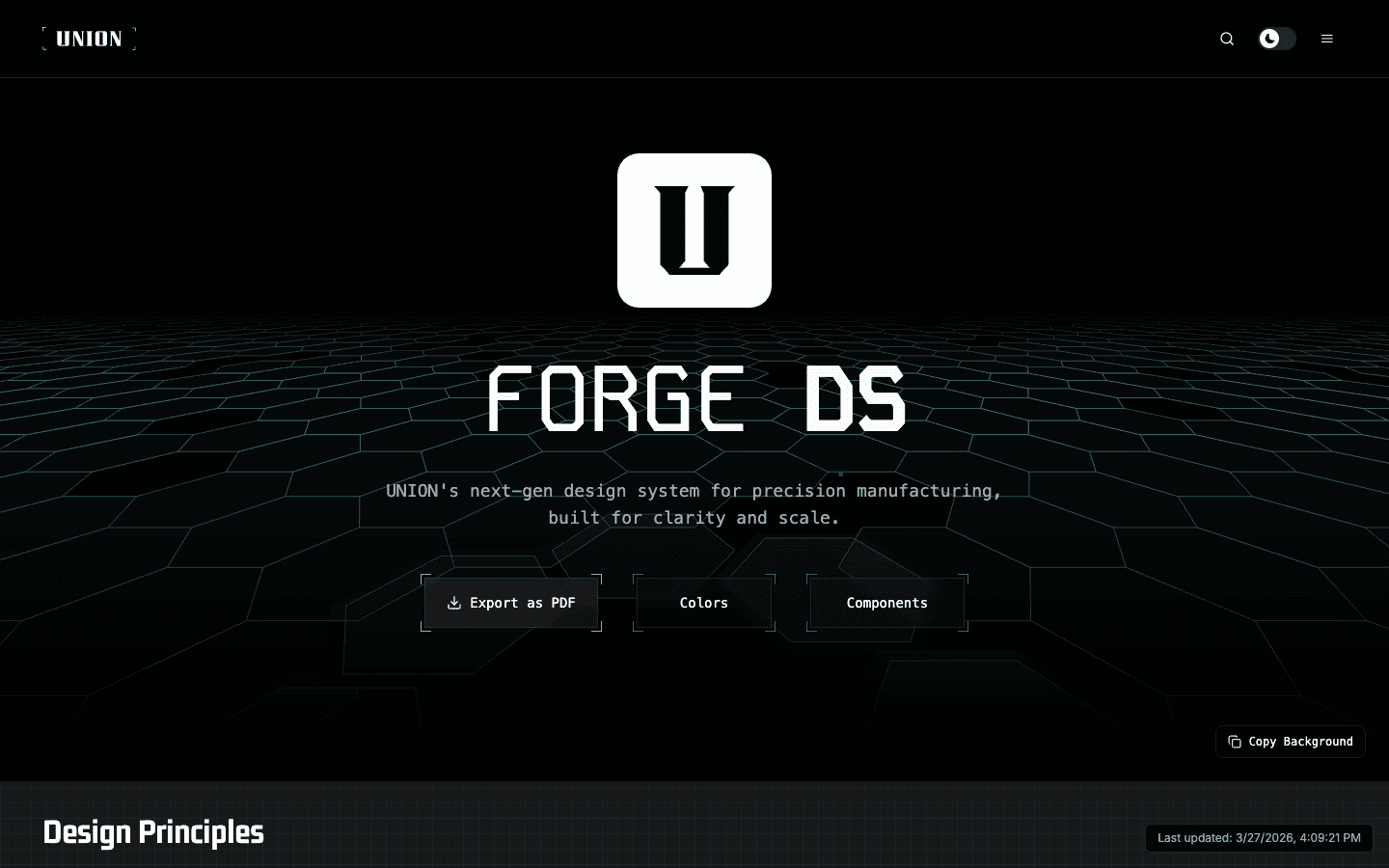
01 / DESIGN SYSTEM IN THE REPO
Every Forge component is the actual module Union Applications import in production. The catalog page and the running app share one canonical source, with the same build and the same deploy.
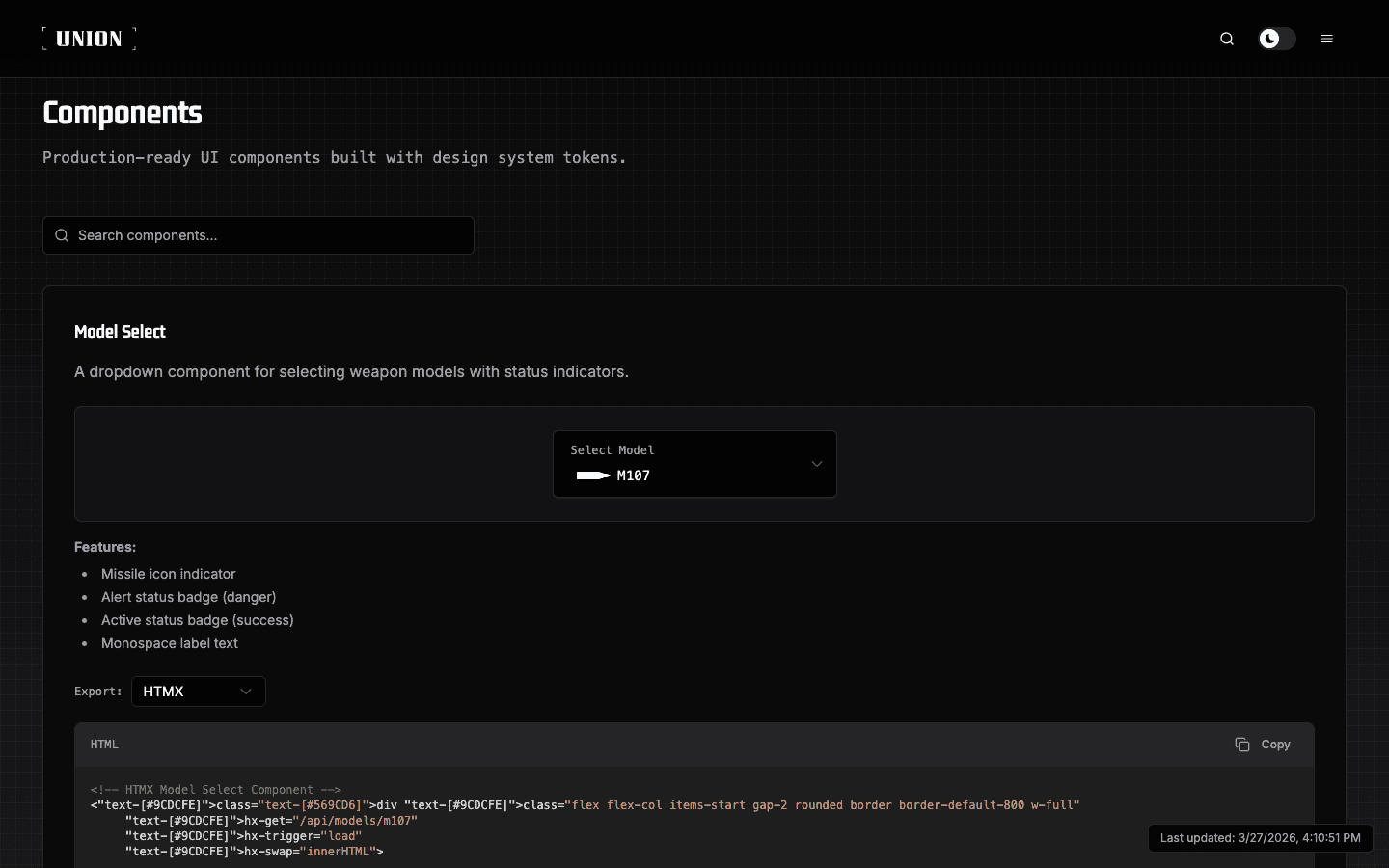
02 / INTEGRATION HANDSHAKE
Every component has Examples, Playground, Code, Props, Accessibility, Tokens, and Anatomy on one page. The Integrate button ships the catalog link, import path, source file, and GitHub URL straight to engineering, who feed it to AI tooling with the prototype's exported code and rebuild against production data.
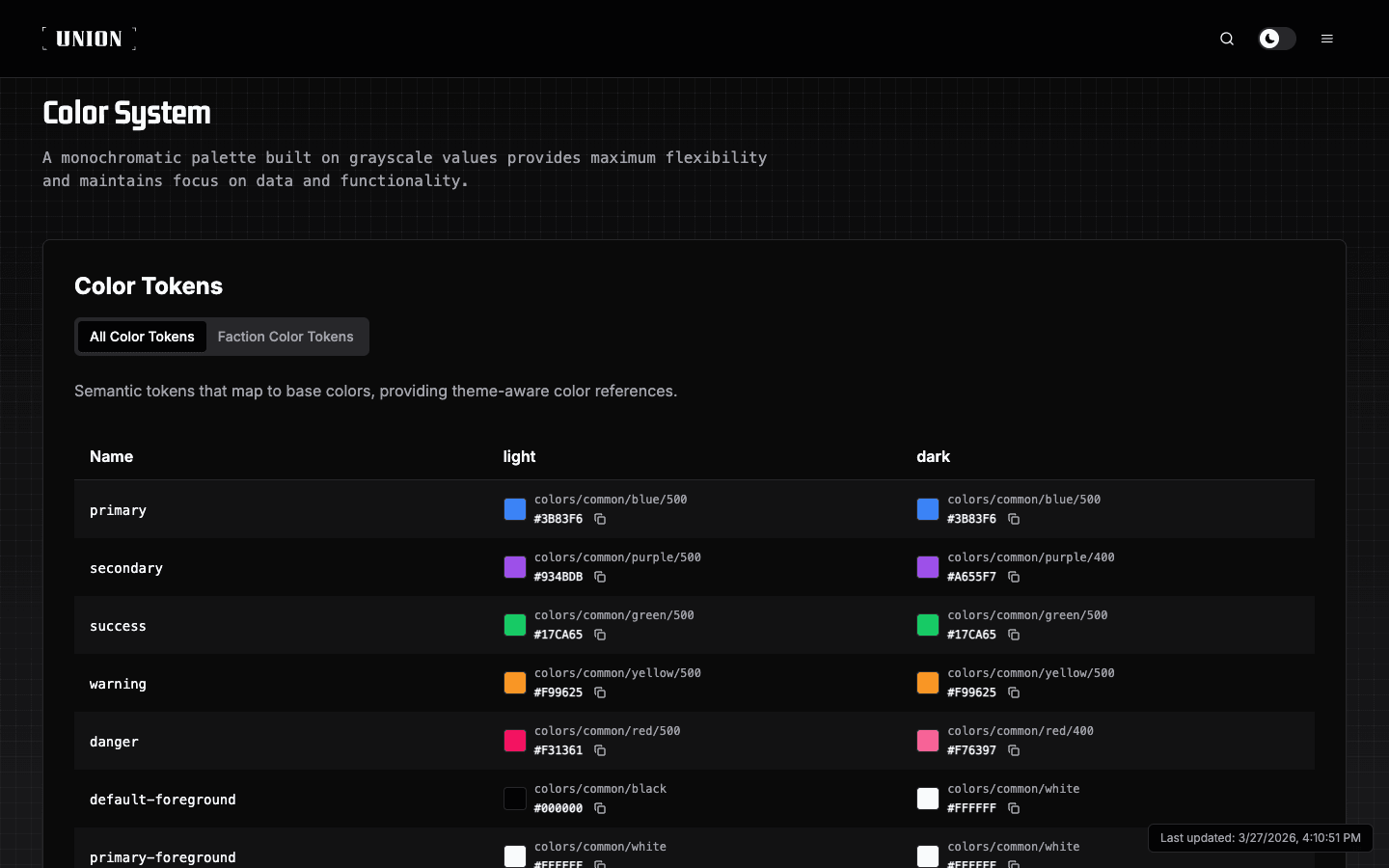
03 / DESIGNER'S LIVING QUARTERS
The design system and the prototypes built on top are where designers live. Product, Design, and Engineering work through vetted prototypes together instead of in silos.
